
Overview
What is back pain?
Back pain refers to any discomfort felt along the spine, from the base of the neck to the tailbone. Most cases are mechanical — meaning the pain comes from the muscles, joints, ligaments or discs that support and move your spine, rather than from a serious underlying disease. It can range from a dull, constant ache to a sharp, sudden stab that makes it hard to stand up straight.
The good news is that the large majority of back pain is not dangerous and responds well to conservative care. The goal of chiropractic care is to reduce your pain, restore normal movement, and give you the tools to keep it from coming back — without relying on medication or surgery as a first step.
Know your pain
Types & sub-conditions of back pain
Back pain is a symptom, not a single diagnosis. Pinpointing which structure is involved is the first step to managing it effectively. Explore the specific conditions we see most often:
Lower back pain
The most common form — stiffness and ache in the lumbar spine, often from sitting, lifting or strain.
Upper & mid-back pain
Tension between the shoulder blades and along the ribs, frequently linked to posture.
Chronic back pain
Pain lasting more than three months, where ongoing management makes the biggest difference.
Herniated / slipped disc
A disc pressing on nearby nerves, which can cause pain, numbness or weakness down the leg.
Sacroiliac (SI joint) pain
Pain low and to one side of the back, where the spine meets the pelvis.
Spinal stenosis & facet pain
Narrowing of the spinal canal or worn spinal joints, more common with age.
The science
How your spine works
Your spine is a column of 33 vertebrae, cushioned by soft discs and held together by muscles and ligaments. It has four regions — the cervical (neck), thoracic (mid-back), lumbar (lower back) and the sacrum and coccyx at the base. The lumbar spine carries most of your body weight, which is why the lower back is the most common site of pain.
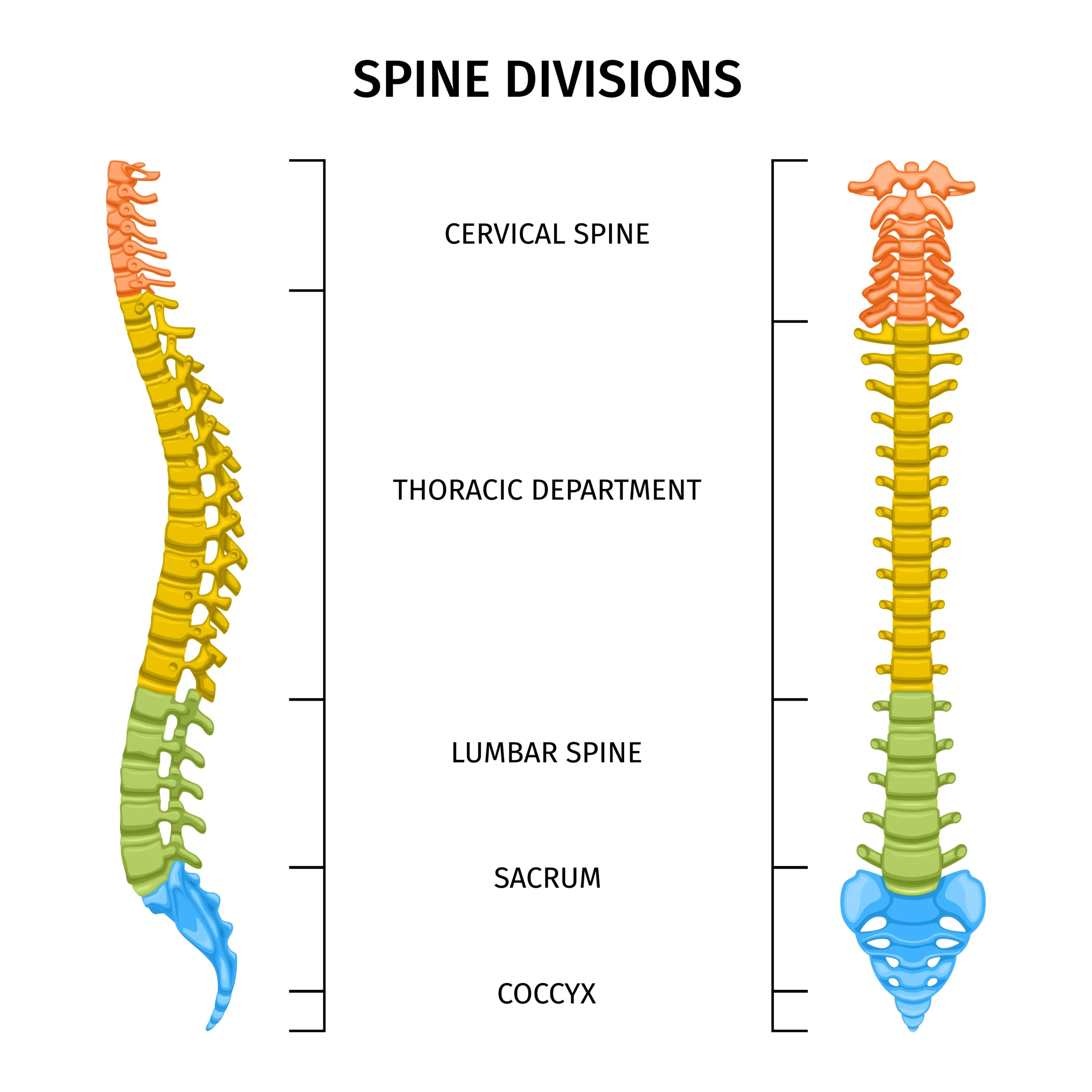
The four regions of the spine
Each region has a natural curve that distributes load and keeps you balanced. When one area loses its normal movement — from injury, posture or wear — the surrounding muscles and joints compensate, and that’s often where pain begins.
Where pain comes from
Discs, facet joints, muscles and nerves all carry pain sensors. A chiropractor’s job is to work out which of these is generating your symptoms, because a disc problem and a joint problem can feel similar but need different care.
Why it happens
What causes back pain
Most back pain builds up over time rather than from a single event. Common triggers include prolonged sitting, poor lifting technique, weak core muscles, sudden overexertion, and the postural strain that comes with desk-based work — a familiar pattern for many in Singapore’s office environment.
Causes of chronic back pain
When pain persists beyond three months, it’s usually driven by a mix of factors: an unresolved original injury, muscle deconditioning, joint degeneration, or the way the nervous system becomes more sensitive to pain over time. Chronic pain rarely has a single cause, which is why a combined care approach works best.
Risk factors
Your risk is higher if you sit for long periods, are carrying extra weight, are pregnant, do heavy or repetitive lifting, or have low core and back-muscle strength. Age-related disc and joint changes also play a role — but these changes are common and don’t automatically mean you’ll have pain.
Recognising it
Symptoms of back pain
Back pain shows up differently from person to person. You might notice a dull, persistent ache; a sharp pain with certain movements; stiffness that’s worst in the morning or after sitting; muscle spasms; or pain that radiates into the buttock or leg. Pain that travels below the knee, or comes with numbness, tingling or weakness, suggests a nerve is involved and is worth getting assessed promptly.
⚠ Warning signs — when to seek urgent care
Most back pain is not an emergency, but see a doctor or go to A&E right away if your back pain comes with any of the following:
- Loss of bladder or bowel control
- Numbness around the groin or inner thighs
- Severe or progressive weakness in the legs
- Back pain following a significant fall or accident
- Unexplained fever, or pain with unexplained weight loss
Getting help
When to see a chiropractor
Consider a chiropractic assessment if your back pain has lasted more than a week or two, keeps returning, limits your daily activities or sleep, or hasn’t improved with rest. You don’t need a referral. A chiropractor can assess whether your pain is mechanical, identify the structures involved, and either manage it or refer you on if something else is going on.
The benefits of early intervention
Addressing back pain early — before compensations and muscle guarding set in — often means a shorter recovery and a lower chance of the problem becoming chronic. Early care also gives you movement and strengthening strategies that protect your back for the long term.
Your first step
How we diagnose back pain
Your first visit begins with a detailed history — when the pain started, what makes it better or worse, and how it affects your day. This is followed by a physical and orthopaedic examination, testing your movement, posture, joint function and, where relevant, your nerves and reflexes. If we suspect something that needs imaging or falls outside chiropractic scope, we’ll say so and refer you appropriately. The result is a clear explanation of what’s driving your pain and a plan built around it.
How we help
Back Pain Care Options at Agape
We combine several evidence-informed techniques, matched to your diagnosis. Your plan may draw on any of the following:
Your journey
What to expect
Assessment
A thorough history and exam to reach a working diagnosis.
Your plan
We explain findings and agree a management plan and timeline together.
Active care
Regular sessions to reduce pain and restore movement.
Maintenance
Home exercises and check-ins to keep you well.
Timelines
Recovery timeline & results
Every back is different, but many people with straightforward mechanical back pain notice meaningful improvement within a few weeks of consistent care, with lasting change taking longer as strength and movement rebuild. More complex or long-standing cases take more time. We’ll set realistic expectations at your assessment and review progress as we go — if you’re not responding as expected, we adjust the plan or refer on.
Your options
Chiropractic vs other options
| Approach | Best suited for | Considerations |
|---|---|---|
| Chiropractic care | Mechanical back pain, joint and disc-related pain | Non-surgical, drug-free; works on the cause and movement |
| Physiotherapy | Rehabilitation and strengthening | Often complementary to chiropractic care |
| Pain medication | Short-term symptom relief | Manages symptoms rather than the underlying cause |
| Surgery | Specific structural problems that fail conservative care | Usually considered only after other options |
For most people, conservative care is the recommended starting point, with surgery reserved for cases that don't respond or have clear structural indications.
Self-care
At-home relief & exercises
Alongside management, gentle movement usually helps more than bed rest. Simple measures — walking regularly, changing position often if you sit all day, gentle stretches such as knee-to-chest and cat-cow, and avoiding prolonged slouching — can ease symptoms and support recovery. We’ll show you which specific exercises suit your condition, since the right movement depends on what’s causing your pain.
Staying well
Preventing back pain
Prevention comes down to a few durable habits: keeping your core and back muscles strong, setting up your workstation so your screen and chair support good posture, lifting with your legs rather than your back, staying active, and breaking up long periods of sitting. Small, consistent changes protect your spine far more than occasional big efforts.
Tailored care
Back pain in specific groups
During pregnancy
Gentle care for the added strain pregnancy places on the lower back and pelvis.
Pregnancy care →Older adults
Managing age-related joint and disc changes with gentle, appropriate care.
About us
Why choose Agape
Our Orchard clinic focuses on getting to the root of your pain, not just easing symptoms for a day. We combine careful diagnosis with a range of techniques so your care fits your condition, and we’re upfront about what chiropractic can and can’t help — including when to refer you elsewhere.

Dr. Luke Ho
Dr. Luke Ho obtained his Chiropractic degree from Palmer College of Chiropractic, Davenport, Iowa, USA, in 2005. Prior to graduating, he worked in the campus clinic for 18 months as a clinical extern, treating students, faculty and outpatients. In 2001, Dr. Ho obtained a BSc. in Sports Medicine from the University of Evansville, Indiana, USA. During his third and fourth years, he interned at the St. Mary’s Hospital Cardiac Rehabilitation Department, the St. Mary’s Sports and Fitness Center, and the University of Evansville Rehabilitation Center, where he worked with the university tennis, volleyball, basketball and baseball teams.
Questions