
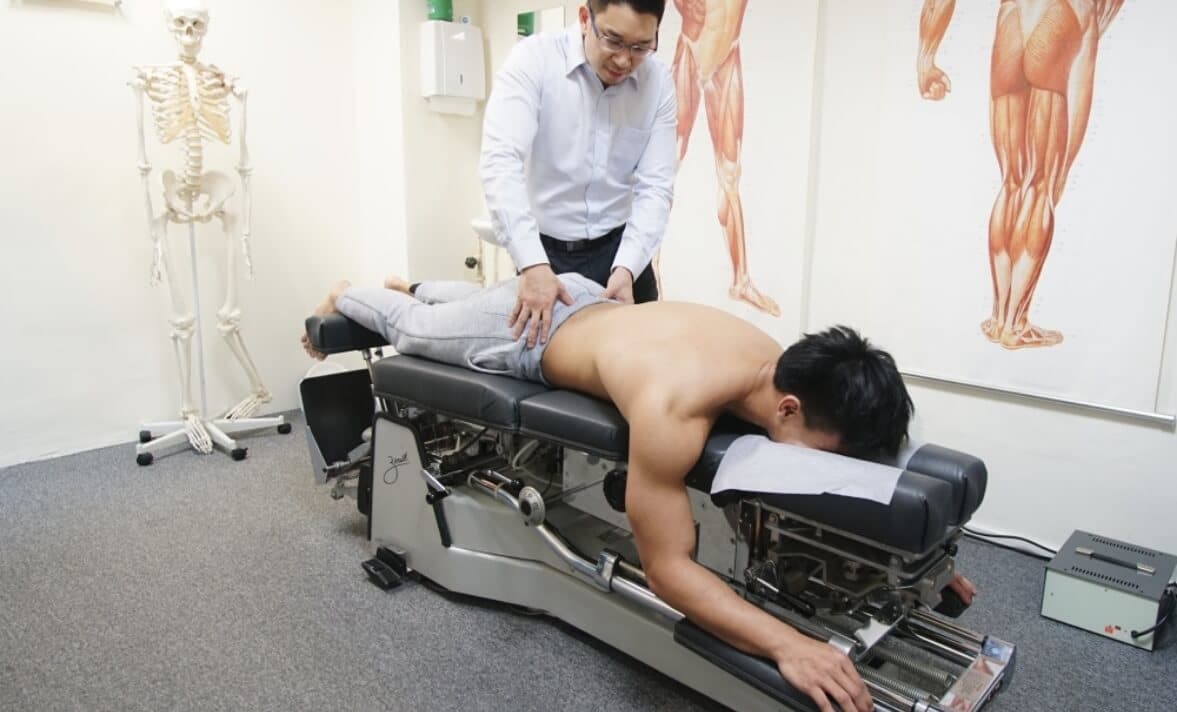
Trigger Point Therapy Singapore
What is trigger point therapy?
Trigger point therapy is a hands-on treatment that targets “muscle knots” — the tight, tender spots that build up in overworked muscles and can be a surprising source of pain. These knots, known clinically as myofascial trigger points, are hyperirritable spots within a taut band of muscle. They’re sore when pressed, can limit your movement, and often refer pain to another part of the body.
Using targeted manual pressure, trigger point therapy aims to release these knots, restore normal muscle function and ease both the local tenderness and the referred pain they can cause. It’s a non-invasive, drug-free technique, and — like all our care — it begins with an assessment so treatment is directed at the muscles actually driving your symptoms.
How does trigger point therapy work?
When a muscle is overloaded — through repetitive strain, sustained postures, stress or injury — a small section of its fibres can stay contracted, forming a taut band with a tender knot at its centre. Rather than being a build-up of “lactic acid” or “toxins” (a common myth), a trigger point is best understood as a small area of muscle that’s stuck in a state of sustained tension and heightened sensitivity.
Two features make trigger points distinctive. First, referred pain: pressing a trigger point often reproduces pain in a different area — which is why a knot in the upper shoulder muscles can cause a headache, or one in the back can send pain across the region. Second, a brief twitch response: the muscle may flicker when the point is found.
Trigger point therapy applies sustained, targeted pressure to the knot — using the thumb, knuckle, elbow or a tool — often combined with stretching and movement. This is designed to release the taut band, restore the muscle’s normal function and length, improve circulation to the area, and reduce both the local and referred pain. The goal is to settle the muscle driving your symptoms, not just to rub where it hurts.
What does trigger point therapy help with?
Trigger point therapy is used mainly for muscle-related pain and the referred pain that comes with it. It can help with:
- Tension headaches
- Neck pain
- Back pain
- Shoulder pain
- Jaw & TMJ pain
- Muscle knots & tightness
- Postural & stress-related tension
- Sports & overuse muscle pain
Benefits of trigger point therapy
- Targets the source of muscle pain — Releases the specific knots driving your local and referred pain.
- Relieves referred pain — Can ease headaches and other pain that starts in an overworked muscle elsewhere.
- Non-invasive & drug-free — A conservative, hands-on option.
- Restores movement — Helps relax tight muscles and improve range of motion, complementing your wider care.
Is trigger point therapy right for you?
Trigger point therapy suits many people with muscle tightness, knots and referred pain — including tension headaches, and neck, shoulder and back pain from posture, stress or overuse. As always, we assess first to confirm it’s the right approach.
What it feels like. Pressure on a trigger point is tender, and it may briefly reproduce your familiar or referred pain — which is actually a good sign we’ve found the right spot. The muscle may twitch, and mild soreness in the area for a day or two afterwards is normal.
⚠ Considerations Trigger point therapy isn’t appropriate in every situation. Please let us know if any of the following apply:
- A recent acute injury, fracture or significant swelling in the area
- An open wound, skin condition or active infection over the treatment site
- A blood-clotting disorder or blood-thinning (anticoagulant) medication (as some bruising can occur)
- Pregnancy (so we can adapt the approach)
- Widespread body pain or a diagnosed condition such as fibromyalgia (which may need a different or broader approach)
Meet the Agape Family
At Agape Chiropractic Clinic, we believe every patient’s condition is unique and we provide customized treatment for each individual. During consultation we discuss your preferences before providing personalized care — beginning with a thorough examination and explanation, followed by chiropractic care and myofascial release therapy. X-rays or MRIs are only done if clinically necessary, and you will be taught simple, effective ways to modify your lifestyle and posture, plus specific exercises to strengthen the affected muscles and improve function, circulation, strength and endurance, so you can stay pain-free.

Dr. Luke Ho
The Chiropractor

Faye
The Myofascial Therapist
Visit us
Our clinic
You will find us in the heart of Singapore on Orchard Road — easy to reach by MRT, in a comfortable, welcoming space for your care.
Agape Chiropractic Clinic Pte Ltd
- Address400 Orchard Road, #05-02, Orchard Towers, Singapore 238875
- Phone+65 6836 7595
- Email[email protected]
- Business Registration No. (UEN)201805679H