
Overview
What is Tennis Elbow?
Tennis elbow, known clinically as lateral epicondylitis (or, more accurately, lateral elbow tendinopathy), is a common overuse condition affecting the tendons on the outer side of the elbow. It causes pain and tenderness at the lateral epicondyle — the bony bump on the outside of the elbow — where the forearm extensor muscles attach. It is one of the most common causes of elbow pain in adults.
An important point that changes how tennis elbow is understood and treated: despite the “-itis” in its medical name, it is generally not an inflammatory condition. Research shows that the tendon changes seen in tennis elbow are degenerative rather than inflammatory — a breakdown and disorganisation of the tendon’s collagen (a tendinopathy) rather than active swelling. This is why anti-inflammatory measures alone often don’t resolve it, and why approaches that progressively load and rebuild the tendon are central to recovery. The tendon most often involved is the extensor carpi radialis brevis (ECRB), part of the common extensor origin.
The name is also somewhat misleading in another way: only a small proportion of cases actually occur in tennis players. Most tennis elbow arises from everyday repetitive activities — manual and trade work, prolonged computer and mouse use, repetitive gripping, and other tasks that repeatedly load the wrist extensors. In Singapore, this makes office workers and manual workers, not just racket-sport players, the typical patients.
Tennis elbow most commonly affects adults between about 35 and 54 years of age, usually in the dominant arm, and has an estimated annual prevalence of roughly 1–3% of adults.
Clinically, it is described by duration:
- Acute tennis elbow: Less than 6 weeks
- Subacute tennis elbow: 6 to 12 weeks
- Chronic tennis elbow: More than 3 months
This classification, together with the symptom pattern and examination, helps determine the most appropriate management plan.
Know your pain
Types & Related Conditions
Elbow pain has several possible sources, and distinguishing tennis elbow from these is important for effective care.
Lateral Epicondylitis (Tennis Elbow)
Tendinopathy of the wrist extensor tendons (especially the ECRB) at the outer elbow — the condition described here.
Medial Epicondylitis (Golfer's Elbow)
The equivalent condition on the inner side of the elbow, affecting the wrist flexor tendons. It causes the same type of tendon problem in a different location.
Radial Tunnel Syndrome
Compression of the radial nerve (posterior interosseous branch) near the elbow can cause outer-forearm pain that mimics tennis elbow, but with a slightly different location and character — an important differential.
Cervical (Neck) Referred Pain
Irritation of a cervical nerve root (particularly around C6) can refer pain into the outer elbow and forearm, which is why the neck is considered in a thorough assessment.
Other elbow conditions
Elbow osteoarthritis, bursitis or ligament problems can also cause elbow pain and are distinguished during examination.
The science
How Elbow & Forearm Structures Affect Tennis Elbow
The elbow and forearm form a system of joints, muscles, tendons and nerves that control grip and wrist movement. Because grip and wrist extension load the outer elbow, that is where tennis elbow develops.
The Lateral Epicondyle & Common Extensor Origin
The wrist extensor muscles share a common attachment at the lateral epicondyle. Repetitive loading here leads to the tendon breakdown that characterises tennis elbow.
The ECRB Tendon
The extensor carpi radialis brevis is the tendon most consistently involved, making it the main focus of loading rehabilitation.
The Wrist Extensor Muscles
These forearm muscles straighten the wrist and stabilise it during gripping; overuse transmits repetitive strain to their shared tendon.
The Radial Nerve
The radial nerve and its posterior interosseous branch pass close to this region, which is why nerve-related conditions can mimic tennis elbow.
The Kinetic Chain (Wrist, Shoulder & Neck)
Grip strength, wrist mechanics, and even shoulder and neck function influence how the forearm is loaded. Assessing the whole arm — and screening the neck — helps identify contributing factors beyond the elbow itself.
Why it happens
Common Causes of Tennis Elbow
Tennis elbow develops when the wrist extensor tendons are repeatedly overloaded faster than they can recover.
1. Repetitive gripping & wrist extension. The core cause — repeated gripping, lifting and wrist movements in work, sport or daily tasks.
2. Occupational overuse. Manual and trade work, and prolonged computer and mouse use, are among the most common triggers.
3. Sport & technique. Racket sports (with poor technique, an unsuitable grip size or string tension), and other gripping sports, can overload the tendon.
4. Sudden or unaccustomed load. A burst of new activity — DIY, gardening or heavy lifting — can trigger symptoms.
5. Age-related tendon change. Tendons become less tolerant of load with age, which is why tennis elbow peaks in middle age.
6. Contributing factors: repetitive gripping or wrist use · manual or trade occupations · prolonged computer/mouse use · poor racket or tool technique and equipment · sudden increases in activity · middle age · reduced forearm strength.
Recognising it
Signs & Symptoms of Tennis Elbow
Symptoms are usually focused on the outer elbow and forearm and are provoked by loading the wrist and grip.
- Pain and tenderness on the outer side of the elbow, over the lateral epicondyle.
- Pain that worsens with gripping, lifting, shaking hands or turning a key or doorknob.
- Pain with wrist extension, such as lifting objects with the palm facing down.
- Pain radiating down the forearm towards the wrist.
- A weaker or painful grip.
- Stiffness or soreness, sometimes worse in the morning.
⚠ Warning signs — when to seek urgent care
- If elbow pain follows a significant injury or fall with severe pain
- Swelling or deformity (possible fracture)
- If there is marked swelling, redness and warmth with fever (possible infection)
- If the elbow locks or won't straighten
- If you have significant numbness, tingling or weakness in the hand (suggesting nerve involvement)
Getting help
When Should You See a Chiropractor for Tennis Elbow?
Tennis elbow often responds well to conservative care, particularly when loading and contributing factors are addressed. Consider an assessment if you have:
- Outer-elbow pain lasting more than a week or two, or that keeps returning.
- Pain with gripping, lifting or repetitive wrist use affecting work or activity.
- A weakened grip or pain that’s interfering with daily tasks.
- Symptoms that aren’t improving with rest alone.
- Elbow pain you suspect is linked to your work setup, technique or neck.
Any red-flag symptoms above need medical assessment first. Part of our role is distinguishing true tennis elbow from conditions such as nerve entrapment or neck-referred pain, and referring where appropriate.
Your first step
How Do We Diagnose Tennis Elbow?
Because several conditions can cause outer-elbow and forearm pain, a careful assessment confirms the diagnosis and identifies contributing factors.
1. History & symptom review. We discuss how and when the pain started, aggravating activities, your work and sporting demands, grip-related symptoms, and relevant medical history.
2. Physical examination. We palpate the lateral epicondyle for tenderness, assess elbow and wrist range of motion, and evaluate grip strength.
3. Provocation tests. Tests such as resisted wrist extension, Cozen’s test and Mill’s test reproduce the pain and help confirm the diagnosis.
4. Neural & cervical screening. We assess the neck and nerve function to distinguish tennis elbow from radial tunnel syndrome or cervical referred pain.
5. Imaging & referral when necessary. Tennis elbow is usually diagnosed clinically. If the diagnosis is unclear, symptoms are persistent, or another condition is suspected, we may refer for imaging (such as ultrasound) or specialist assessment.
How we help
Tennis Elbow Care Options at Agape Chiropractic Clinic
Because tennis elbow is a tendon-loading problem rather than a simple inflammation, effective care combines settling symptoms with progressively rebuilding the tendon's capacity. Depending on your assessment, your plan may include one or more of the following.
Soft tissue therapy
Myofascial release, trigger point therapy and instrument-assisted soft tissue techniques (IASTM) and Active Release for the wrist extensors and forearm to reduce tension and improve tissue quality.
Chiropractic adjustments & mobilisation (extremity care)
Gentle techniques to restore movement to the elbow and wrist joints, and — where relevant — the neck, supporting better mechanics through the whole arm.
Shockwave therapy
Focused acoustic-wave therapy is a recognised option for stubborn lateral epicondylitis, used to stimulate tendon healing as part of a broader plan.
Progressive (eccentric) loading rehabilitation
Graded strengthening of the wrist extensors — including eccentric loading exercises — is the evidence-based cornerstone of recovery, because it rebuilds the degenerated tendon rather than simply resting it.
Activity modification & ergonomics
Practical advice on grip, technique, tools, workstation setup and load management, plus counterforce bracing or taping where helpful, to offload the tendon while it recovers.
Your journey
What to Expect During Your Care?
Initial consultation
A detailed discussion of your symptoms, activities, work setup and goals.
Comprehensive assessment
A thorough examination of the elbow, wrist, grip and — where relevant — the neck, using provocation tests to confirm the diagnosis.
Personalised care plan
We explain our findings, discuss your diagnosis, and recommend a plan that may combine soft tissue care, shockwave therapy, loading rehabilitation and ergonomic advice.
Monitoring your progress
We review your pain, grip strength and function over time and progress your loading programme accordingly.
Timelines
Recovery & Prognosis
Tennis elbow can be persistent — left alone it often takes many months (commonly cited as around 6 to 12 months) to settle, and it can recur if the underlying load and tendon capacity aren’t addressed. The encouraging news is that active, loading-based care aims to speed recovery, restore grip and reduce the chance of it returning.
Factors that influence recovery: how long you’ve had symptoms · the severity of the tendon change · your work and activity demands · forearm and grip strength · whether contributing factors (technique, ergonomics, load) are corrected · and how consistently you complete your loading programme.
Because tennis elbow is fundamentally about tendon capacity, progressively rebuilding the tendon’s tolerance to load — rather than simply resting it — is central to a durable recovery.
Self-care
Managing Tennis Elbow at Home
Many cases can be supported with sensible self-care. Seek professional advice if pain persists or worsens.
- Modify aggravating activities — adjust gripping, lifting and repetitive wrist tasks rather than stopping activity entirely.
- Continue your prescribed loading exercises, which are the key to rebuilding the tendon.
- Use a counterforce brace or taping if advised, to offload the tendon during activity.
- Improve your ergonomics — mouse, keyboard, tool and racket setup.
- Apply heat or cold for symptom relief as needed.
- Be patient and consistent. Tendons respond to gradual, sustained loading rather than quick fixes.
- Know when to seek care if pain is severe, follows an injury, or comes with numbness, weakness or swelling.
Staying well
How to Prevent Tennis Elbow From Returning?
- Build and maintain forearm and grip strength so the tendon tolerates load.
- Warm up and progress activity gradually, avoiding sudden spikes.
- Optimise technique and equipment in racket sports and at your workstation.
- Vary repetitive gripping tasks and take breaks.
- Address early symptoms promptly rather than pushing through them.
Tailored care
Tennis Elbow Across Different Groups & Lifestyles
Office & computer users
Prolonged mouse and keyboard use is a very common, and often overlooked, cause.
Manual & trade workers
Repetitive gripping and tool use place high load on the extensor tendons.
Racket-sport players
Poor technique, grip size or equipment can overload the tendon.
Middle-aged adults
Tennis elbow peaks around ages 35–54 as tendons become less load-tolerant.
Musicians and repetitive-task workers
Sustained gripping and fine motor loading can contribute.
About us
Why Choose Agape Chiropractic Clinic?
Our Chiropractic Clinic in Orchard focuses on getting to the root of your pain, not just easing symptoms for a day. We combine careful diagnosis with a range of techniques so your care fits your condition, and we’re upfront about what chiropractic can and can’t help — including when to refer you elsewhere.
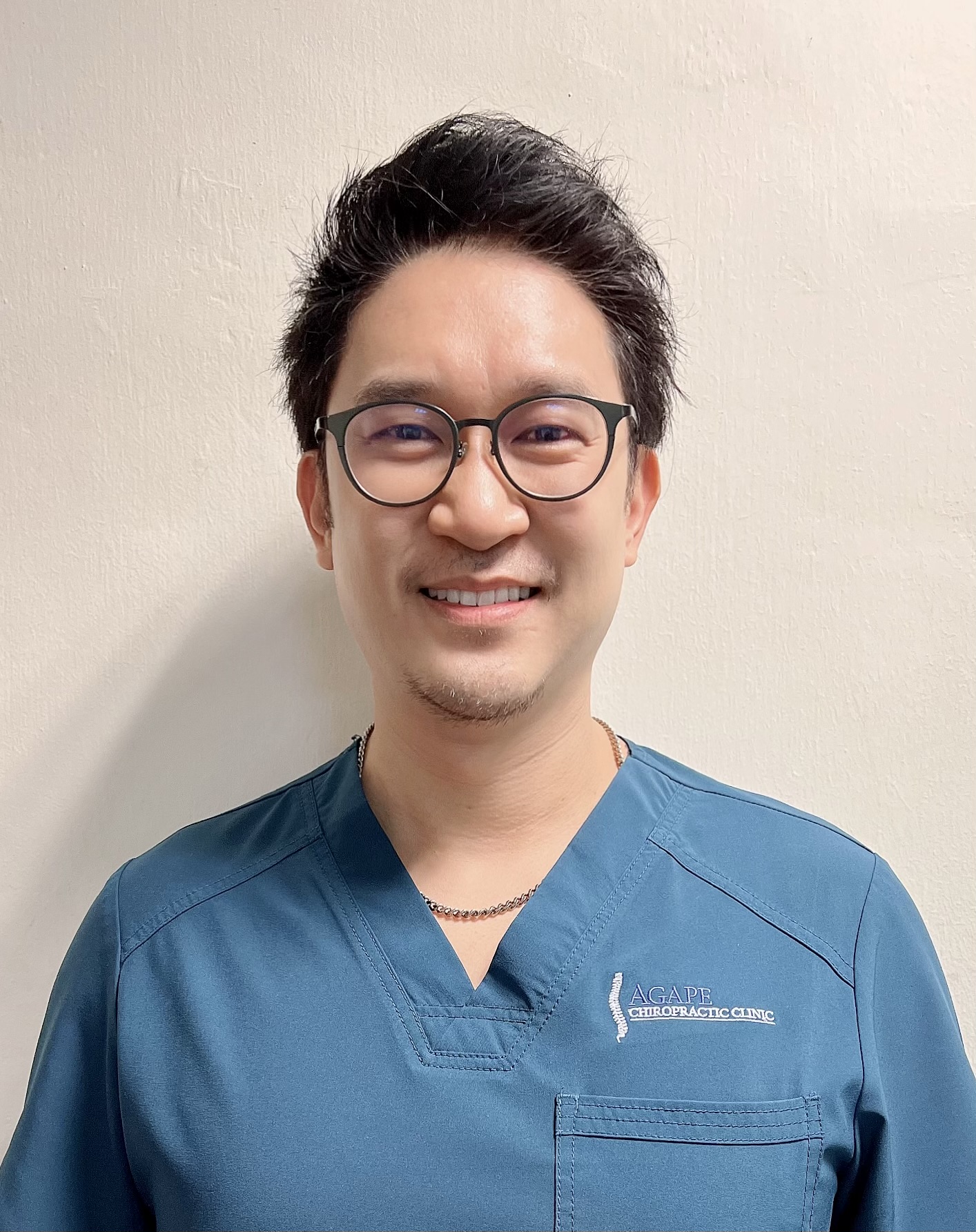
Dr. Luke Ho
Dr. Luke Ho obtained his Chiropractic degree from Palmer College of Chiropractic, Davenport, Iowa, USA in 2005. Prior to graduating, he worked in the campus clinic for 18 months as a clinical extern, treating students, faculty, and outpatients. In 2001 Dr. Ho obtained a BSc. in Sports Medicine from the University of Evansville, Indiana, USA. During his 3rd and 4th years there, he interned at the St. Mary’s Hospital Cardiac Rehabilitation Department, the St. Mary’s Sports and Fitness Center, and the University of Evansville Rehabilitation Center where he worked closely with the university tennis, volleyball, basketball and baseball teams.
Questions