
Overview
What is Shoulder Pain?
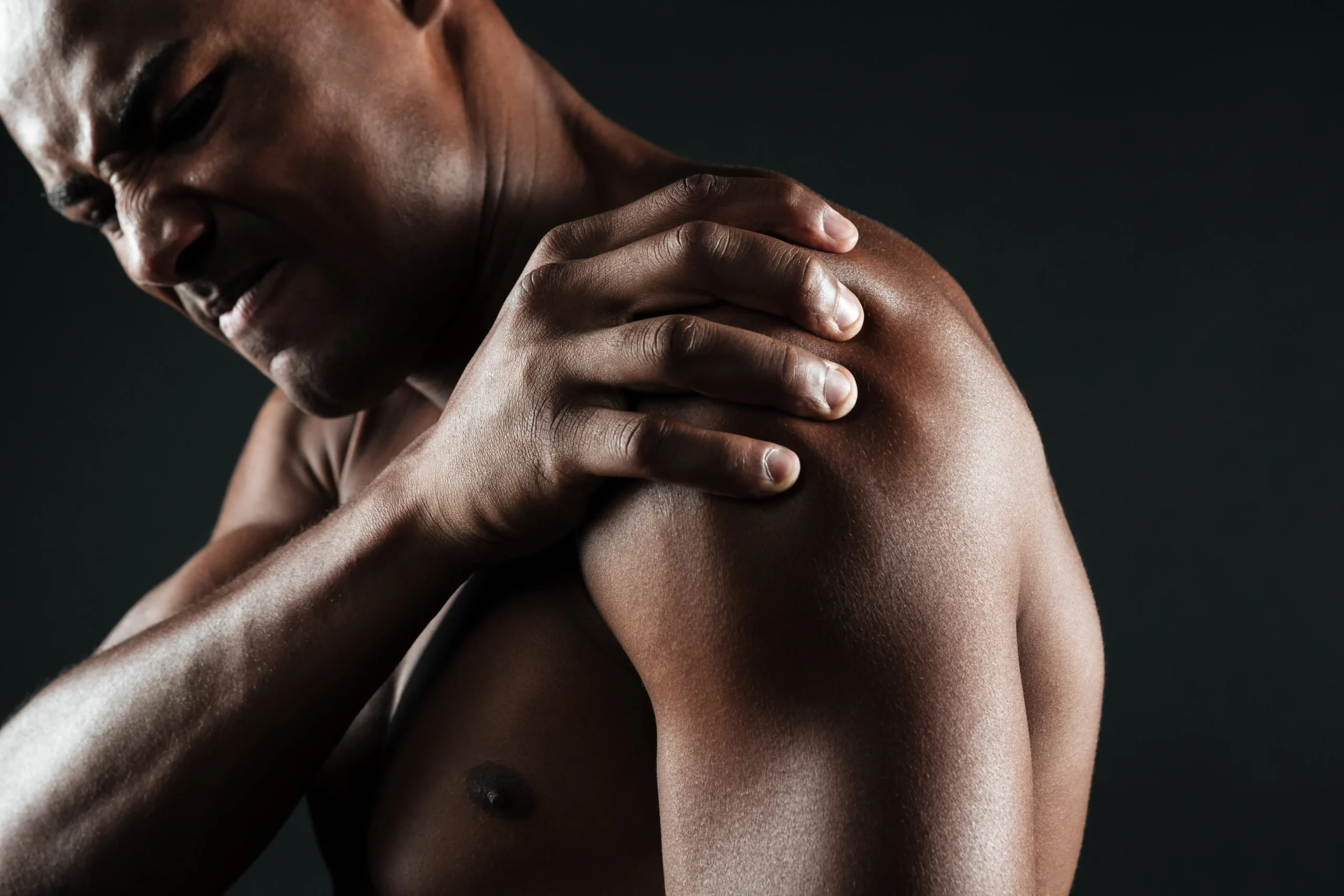
Shoulder pain is pain, stiffness, weakness or restricted movement affecting the shoulder region — one of the most common musculoskeletal complaints, alongside back and neck pain. It is a symptom rather than a diagnosis, and it can arise from the joints, tendons, muscles, bursa or capsule of the shoulder, or be referred from the neck.
The shoulder is the most mobile joint in the body, which is both its strength and its vulnerability. To allow such a wide range of movement, the ball-and-socket glenohumeral joint sacrifices some bony stability and relies heavily on the surrounding soft tissues — particularly the rotator cuff — for support. This trade-off between mobility and stability is exactly why the rotator cuff and related structures are so commonly injured, and why rotator cuff disorders are the leading cause of shoulder pain.
The shoulder is actually a complex of several joints working together: the glenohumeral joint (the main ball-and-socket), the acromioclavicular (AC) joint, the sternoclavicular joint, and the scapulothoracic articulation where the shoulder blade glides over the ribcage. The rotator cuff — four muscles known as the SITS group (supraspinatus, infraspinatus, teres minor and subscapularis) — stabilises the joint and drives much of its movement, while the subacromial bursa and the biceps tendon are also frequently involved in pain. Importantly, not all shoulder pain comes from the shoulder itself: problems in the cervical spine (such as C5–C6 nerve irritation) can refer pain into the shoulder and arm, which is why assessing the neck is part of a thorough evaluation.
In Singapore, shoulder pain is common among office and manual workers alike, driven by prolonged desk posture, repetitive overhead activity, and the general rise in musculoskeletal complaints in a screen-based working population.
Clinically, shoulder pain is described by duration:
- Acute shoulder pain: Less than 6 weeks
- Subacute shoulder pain: 6 to 12 weeks
- Chronic shoulder pain: More than 3 months
This classification, together with the pattern of symptoms and examination findings, helps determine the most appropriate management plan.
Know your pain
Types of Shoulder Pain & Related Conditions
Shoulder pain presents in many forms depending on the structure involved. Identifying the specific condition is what allows care to address the source rather than the symptom alone.
Rotator Cuff Tendinopathy & Tears
The most common source of shoulder pain. The rotator cuff tendons — most often the supraspinatus — can become irritated (tendinopathy) or torn (partial or full-thickness), causing pain with lifting and overhead activity, and weakness in larger tears.
Subacromial Impingement Syndrome
Pinching of the rotator cuff tendons and subacromial bursa in the space beneath the acromion, typically causing a "painful arc" of pain when raising the arm to the side.
Subacromial Bursitis
Inflammation of the bursa that cushions the rotator cuff, often occurring alongside impingement and producing pain with movement.
Frozen Shoulder (Adhesive Capsulitis)
Progressive stiffness and pain as the joint capsule thickens and tightens, with a marked loss of movement — especially external rotation. It classically passes through three phases: a painful "freezing" phase, a stiff "frozen" phase, and a gradual "thawing" phase.
Acromioclavicular (AC) Joint Problems
Sprains (often from a fall or contact injury) or osteoarthritis of the AC joint, causing pain at the top of the shoulder.
Biceps Tendinopathy
Irritation of the long head of the biceps tendon at the front of the shoulder.
Shoulder Instability
Excessive looseness or a history of dislocation, where the joint moves too freely, often in younger and more active people.
Referred Neck Pain
Cervical spine dysfunction or nerve irritation that refers pain into the shoulder and arm — an important differential that a neck assessment can identify.
Glenohumeral Osteoarthritis
Age-related wear of the main shoulder joint, causing pain, stiffness and reduced movement.
The science
How Shoulder Structures Affect Shoulder Pain?
The shoulder is a coordinated system of joints, muscles, tendons and a capsule. Because so many structures work together, similar symptoms can have different sources — which is why pinpointing the involved structure is central to effective care.
The Glenohumeral Joint
The main ball-and-socket joint provides most of the shoulder’s movement but depends on soft-tissue support for stability, making it prone to impingement, instability and osteoarthritis.
The Rotator Cuff (SITS)
The supraspinatus, infraspinatus, teres minor and subscapularis stabilise the joint and drive movement. They are the most commonly injured structures, through tendinopathy, tears or impingement.
The Subacromial Space, Bursa & Tendons
The rotator cuff tendons and subacromial bursa pass through a narrow space beneath the acromion. When this space is compromised — by posture, bony shape or swelling — impingement and bursitis result.
The Scapula & Scapulothoracic Control
The shoulder blade must glide and rotate smoothly for the arm to move well. Poor control of the shoulder blade (scapular dyskinesis), often linked to posture and muscle imbalance, is a common and treatable contributor to shoulder pain.
The AC Joint & Capsule
The AC joint at the top of the shoulder and the surrounding capsule can be sources of pain in their own right, the capsule being central to frozen shoulder.
The Neck Connection
The cervical spine and its nerves can refer pain into the shoulder, so neck dysfunction is always considered as a possible source.
Why it happens
Common Causes of Shoulder Pain
Shoulder pain usually results from a combination of factors rather than a single cause.
Overuse & repetitive movement
Repetitive overhead activity — in sport, manual work or daily tasks — is a leading cause of rotator cuff tendinopathy and impingement.
Injury & trauma
Falls, sudden loading, dislocations and contact injuries can damage the rotator cuff, AC joint, labrum or capsule.
Degenerative changes
Ageing brings gradual wear of the rotator cuff tendons and the shoulder joint, increasing the likelihood of tendinopathy, tears and osteoarthritis.
Poor posture & scapular dyskinesis
Rounded-shoulder posture and poor shoulder-blade control reduce the space for the rotator cuff and contribute to impingement — common among desk workers.
Referred neck problems
Cervical dysfunction or nerve irritation can present as shoulder pain.
Inflammatory & metabolic factors
Frozen shoulder, in particular, is more common in people with diabetes and typically affects adults between 40 and 60, more often women.
Contributing factors: repetitive overhead work or sport · poor posture and scapular control · previous shoulder injury or dislocation · increasing age · diabetes (for frozen shoulder) · sedentary or desk-based work · muscle imbalance and weakness.
Recognising it
Signs & Symptoms of Shoulder Pain
Symptoms vary with the underlying condition, which is why the pattern of pain is a key clue to the diagnosis.
- Pain with lifting or overhead activity, often at the front or side of the shoulder.
- A “painful arc” — pain when raising the arm to the side, typically between about 60 and 120 degrees — suggesting impingement.
- Night pain and difficulty lying on the affected side, common with rotator cuff problems and frozen shoulder.
- Stiffness and loss of movement, especially difficulty with external rotation, characteristic of frozen shoulder.
- Weakness when lifting or rotating the arm, which can indicate a rotator cuff tear.
- Clicking, catching or a feeling of instability.
- Pain at the top of the shoulder with AC joint problems, or deep aching pain with osteoarthritis.
⚠ Warning signs — when to seek urgent care
- A shoulder that looks deformed or is dislocated
- Significant trauma with severe pain or inability to move the arm (possible fracture)
- Sudden weakness or a suspected large rotator cuff tear
- Unexplained lumps or a general feeling of being unwell
- A hot, swollen, red shoulder with fever (possible infection)
Getting help
When Should You See a Chiropractor for Shoulder Pain?
Many shoulder problems respond well to conservative care. Consider an assessment if you have:
- Shoulder pain lasting more than a few days or that keeps returning.
- Pain with overhead activity or a painful arc when raising the arm.
- Stiffness and reduced movement affecting daily tasks like dressing or reaching.
- Night pain disturbing your sleep.
- Shoulder pain that seems linked to your neck or posture.
Any red-flag symptoms above require urgent medical care instead. Part of our role is recognising shoulder problems that need specialist or surgical assessment — such as full-thickness tears with weakness, instability or dislocation — and referring promptly.
Your first step
How Do We Diagnose Shoulder Pain?
Because several structures can produce similar symptoms, a careful assessment identifies the source and guides appropriate care and referral.
History & symptom review
We discuss how and when the pain started, aggravating and easing activities, night pain, any injury, your work and sporting demands, and relevant medical history (including diabetes, relevant to frozen shoulder).
Physical examination
We assess posture, active and passive range of motion, joint mobility, scapular control, muscle strength and areas of tenderness — a key step, since a loss of both active and passive movement points toward frozen shoulder, while weakness with preserved passive movement suggests a rotator cuff problem.
Orthopaedic & special tests
Where appropriate we use targeted tests — such as the Hawkins–Kennedy and Neer tests for impingement, the empty-can (Jobe) test for the supraspinatus, external-rotation assessment for frozen shoulder, and apprehension testing for instability — to differentiate the conditions.
Cervical screening
We assess the neck to identify or exclude referred pain from the cervical spine.
Imaging & referral when necessary
Many shoulder conditions are diagnosed clinically. If a significant tear, fracture, dislocation or another condition needing specialist care is suspected, we refer for imaging (ultrasound, X-ray or MRI) or specialist review.
How we help
Chiropractic Care Options for Shoulder Pain in Singapore
Every shoulder problem is different, so we use your assessment findings to build a personalised, conservative care plan aimed at relieving pain, restoring movement and rebuilding strength. Depending on your diagnosis, your plan may include one or more of the following.
Chiropractic adjustments & mobilisation (extremity care)
Gentle, targeted techniques to restore movement to restricted shoulder, AC, scapulothoracic and related cervicothoracic joints, supporting better mechanics and reduced pain.
Explore →Soft tissue therapy
Myofascial release, trigger point therapy and instrument-assisted techniques (IASTM) to reduce tension in the rotator cuff and surrounding muscles and restore flexibility.
Shockwave therapy
Focused acoustic-wave therapy that may help stubborn rotator cuff and tendon-related shoulder pain, and is particularly used for calcific tendinitis of the shoulder, as part of a broader plan.
Exercise rehabilitation
Progressive rotator cuff strengthening and scapular stabilisation exercises to restore control, strength and endurance — the cornerstone of lasting shoulder recovery and of addressing scapular dyskinesis.
Co-management & referral
For tears needing surgical review, instability, or shoulder pain with a suspected non-musculoskeletal cause, we work alongside and refer to the appropriate provider.
Postural & ergonomic advice
Practical guidance to improve posture and shoulder-blade position and reduce the strain behind impingement.
Your journey
What to Expect During Your Shoulder Care?
Initial consultation
A detailed discussion of your symptoms, activities, injury history and medical background.
Comprehensive assessment
A thorough examination of shoulder movement, strength, joint mobility, scapular control and the neck, using special tests to identify the condition.
Personalised care plan
We explain our findings, discuss your diagnosis, and recommend a plan that may combine hands-on care, shockwave therapy, rehabilitation and advice.
Monitoring your progress
We review your pain, movement and strength over time and progress your rehabilitation accordingly.
Timelines
Recovery & Prognosis
Recovery depends heavily on the specific condition. Rotator cuff tendinopathy and impingement often improve over weeks to a few months with appropriate care and rehabilitation. Frozen shoulder typically takes longer — it can run a prolonged natural course over many months to a few years across its freezing, frozen and thawing phases, though appropriate care aims to reduce pain and maintain as much movement as possible along the way. Full-thickness tears and significant structural damage may require specialist or surgical management.
Factors that influence recovery: the specific condition and its severity · how long you’ve had symptoms · your age and general health · underlying conditions such as diabetes (for frozen shoulder) · your activity and work demands · rotator cuff and scapular strength · and how consistently you follow your rehabilitation programme.
Because the rotator cuff and shoulder blade provide the shoulder’s stability, restoring their strength and control is central to lasting recovery and to reducing the risk of the problem returning — which is why exercise rehabilitation forms the core of most plans.
Self-care
How to Manage Shoulder Pain at Home?
Many shoulder problems can be supported with simple self-care. Seek professional advice if pain persists, worsens or limits daily life — and urgent care for any red-flag symptom.
- Keep the shoulder gently moving within comfort; complete rest can worsen stiffness, especially with frozen shoulder.
- Modify aggravating activities, particularly repetitive overhead tasks, while you recover.
- Heat or cold therapy. Cold may ease an acutely painful or inflamed shoulder; heat can relax tight muscles and stiffness.
- Do your prescribed exercises consistently — rotator cuff and scapular strengthening are key to recovery.
- Improve your posture and set up your workstation to reduce shoulder strain.
- Adjust your sleep position to avoid lying directly on the painful shoulder.
- Know when to seek care if pain is severe, comes with weakness, follows a significant injury, or isn’t improving.
Staying well
How to Prevent Shoulder Pain From Returning?
Not every shoulder problem can be prevented, but sensible habits reduce the risk.
- Strengthen the rotator cuff and scapular muscles to support the joint.
- Maintain good posture and shoulder-blade position, especially at a desk.
- Warm up and progress gradually before overhead sport or heavy activity.
- Vary repetitive overhead tasks and take breaks to avoid overload.
- Address minor niggles early rather than pushing through them.
- Stay generally active to maintain shoulder mobility and strength.
Tailored care
Shoulder Pain Across Different Age Groups & Lifestyles
Overhead athletes & manual workers
Repetitive overhead loading commonly causes rotator cuff tendinopathy, impingement and, sometimes, instability.
Office workers
Poor posture and scapular control contribute to impingement and neck-referred shoulder pain.
Older adults
Degenerative rotator cuff changes, tears and glenohumeral osteoarthritis become more common with age.
After injury
Falls, dislocations and contact injuries can affect the rotator cuff, AC joint or labrum and benefit from assessment.
People with diabetes
Are at notably higher risk of frozen shoulder, which also peaks between ages 40 and 60.
About us
Why Choose Agape for Shoulder Pain Care in Singapore?
Our Chiropractic Clinic in Orchard focuses on getting to the root of your pain, not just easing symptoms for a day. We combine careful diagnosis with a range of techniques so your care fits your condition, and we’re upfront about what chiropractic can and can’t help — including when to refer you elsewhere.

Dr. Luke Ho
Dr. Luke Ho obtained his Chiropractic degree from Palmer College of Chiropractic, Davenport, Iowa, USA in 2005. Prior to graduating, he worked in the campus clinic for 18 months as a clinical extern, treating students, faculty, and outpatients. In 2001 Dr. Ho obtained a BSc. in Sports Medicine from the University of Evansville, Indiana, USA. During his 3rd and 4th years there, he interned at the St. Mary’s Hospital Cardiac Rehabilitation Department, the St. Mary’s Sports and Fitness Center, and the University of Evansville Rehabilitation Center where he worked closely with the university tennis, volleyball, basketball and baseball teams.
Questions