
Overview
What is Neck Pain?
Neck pain, also known as cervicalgia, is pain, stiffness, discomfort, or restricted movement affecting the cervical spine — the seven vertebrae (C1–C7) that support the head and connect it to the upper back and shoulders. It is one of the most common musculoskeletal symptoms, second only to lower back pain among spinal complaints, and it is a symptom rather than a disease itself.
The cervical spine is the most mobile region of the spine. It supports the weight of the head, allows you to look up, down and over each shoulder, protects the upper spinal cord and vertebral arteries, and houses the nerve roots that travel to the shoulders, arms and hands. When the muscles, ligaments, fascia, cervical (facet) joints, intervertebral discs, or spinal nerves become irritated through injury, repetitive strain, poor posture, reduced mobility, sustained screen use, or age-related spinal changes, neck pain can develop. Depending on the underlying cause, symptoms may remain localised to the neck or radiate into the head, shoulder, arm or hand when a cervical nerve root is involved.
In Singapore, neck pain has become increasingly common alongside a largely desk-based workforce and one of the world’s highest rates of smartphone and device use. Prolonged screen time and sustained forward-head postures place the cervical spine under continuous load, and work-related musculoskeletal disorders remain one of the leading occupational health concerns reported to the Ministry of Manpower (MOM). This makes early assessment, appropriate management and preventive care especially relevant for office professionals, students and heavy device users.
Posture matters more than many people realise. The head weighs roughly 5 kg (about 10–12 lb) in a neutral position, but the effective load on the cervical spine rises sharply as the head tilts forward, research has estimated that at around 60 degrees of forward flexion (the angle many people hold while looking down at a phone) the load can rise to the equivalent of 20–27 kg. This is the mechanism behind what is commonly called “text neck” or “tech neck,” and it helps explain why posture-related neck pain is so widespread.
Most people experience mechanical (non-specific) neck pain, where symptoms are influenced by posture, movement, prolonged sitting, screen use or daily activities. Neck pain may also be associated with specific cervical conditions such as cervical radiculopathy (a pinched nerve), a herniated (slipped) cervical disc, cervical spondylosis (neck arthritis), cervical facet joint syndrome, whiplash-associated disorder, or cervicogenic headache. Although these conditions can produce similar symptoms, they affect different cervical structures and often require different management approaches.
Clinically, neck pain is classified by its duration:
- Acute neck pain: Less than 6 weeks
- Subacute neck pain: 6 to 12 weeks
- Chronic neck pain: More than 3 months
This classification helps healthcare professionals determine the most appropriate management plan based on your symptoms, clinical examination, functional limitations, and recovery goals.
Know your pain
Types of Neck Pain & Related Conditions
Neck pain presents in many forms depending on the region of the cervical spine, the tissues involved and the underlying condition. Identifying the specific type is what allows care to address the source rather than the symptom alone.
Mechanical (Non-Specific) Neck Pain
The most common form, arising from the muscles, cervical facet joints and ligaments. Symptoms typically change with posture and movement and are often linked to prolonged sitting, sustained screen use, muscular tension and reduced mobility.
Cervical Radiculopathy (Pinched Nerve)
When a cervical nerve root is compressed or irritated — often by a disc bulge or bony narrowing — pain, numbness, tingling or weakness can radiate from the neck into the shoulder, arm or hand, following the path of the affected nerve.
Herniated & Slipped Cervical Disc
The intervertebral discs cushion the cervical vertebrae. When the annulus fibrosus weakens and the nucleus pulposus bulges or herniates, it can irritate a nearby nerve root, causing neck pain together with arm symptoms such as numbness, tingling or weakness.
Cervical Spondylosis (Neck Arthritis)
Age-related wear of the cervical discs, facet joints and uncovertebral joints. It may cause stiffness, aching, reduced range of motion and, in some cases, nerve irritation — though these degenerative changes are common and not always painful.
Whiplash-Associated Disorder (WAD)
A rapid back-and-forth movement of the neck, often from a road-traffic accident or fall, that strains the muscles, ligaments and joints of the cervical spine. Symptoms such as pain, stiffness, headache and reduced movement can be delayed by hours or days after the injury.
Postural & Cervicogenic Conditions
Sustained forward-head posture ("tech neck") overloads the neck and upper back. Irritation of the upper cervical joints and muscles can also refer pain into the head as a cervicogenic headache, or contribute to cervicogenic dizziness — symptoms that many people don't realise can originate from the neck.
The science
How Spinal Structures Affect Neck Pain?
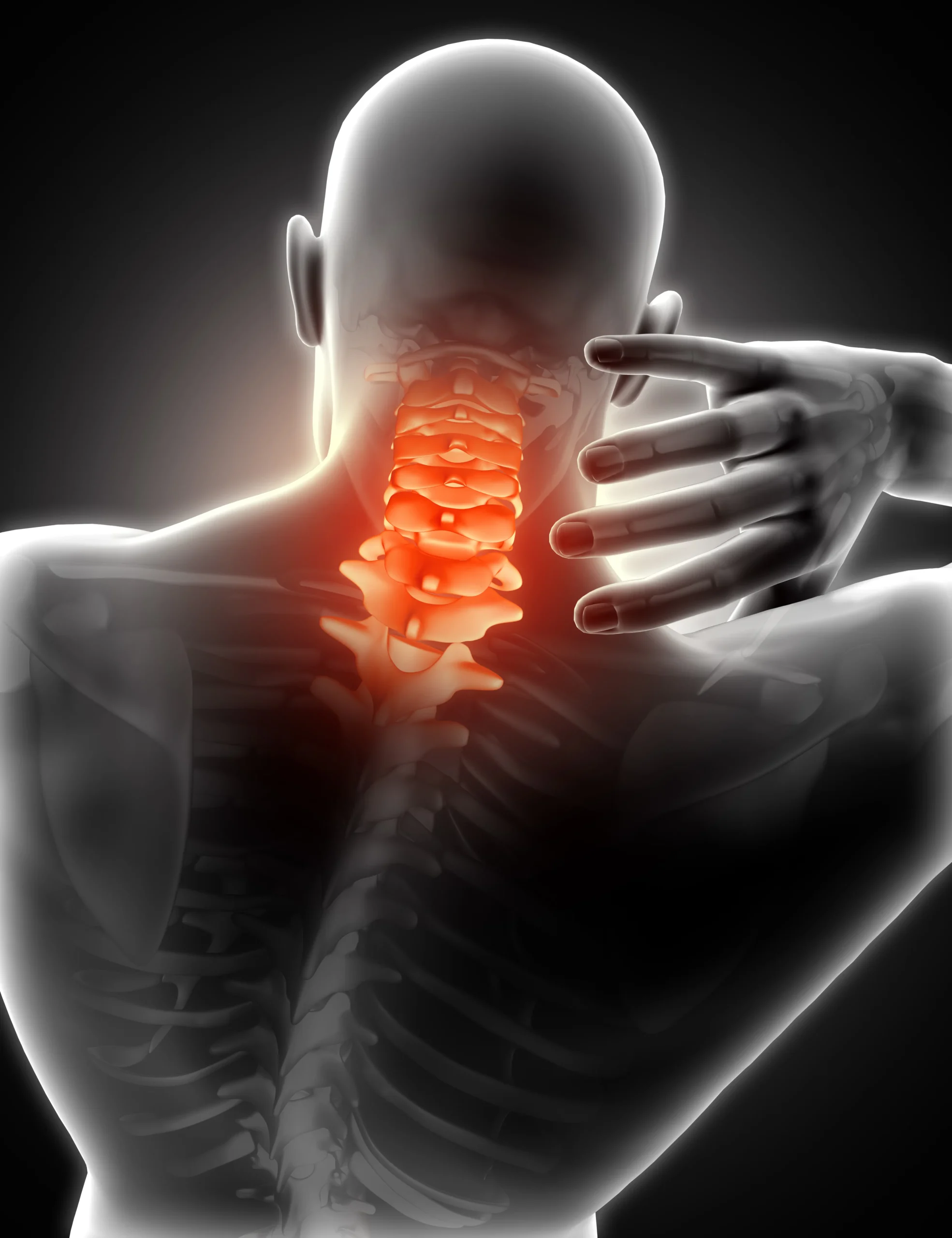
Your neck is more than a column of small bones. It is an integrated system of cervical vertebrae, intervertebral discs, facet and uncovertebral joints, muscles, ligaments, fascia and spinal nerves that work together to support your head and enable a wide range of movement. Every time you look down, turn your head or hold a posture, these structures share the load while protecting the spinal cord and the nerves that supply your arms.
When one or more becomes irritated — through injury, repetitive strain, poor posture, reduced mobility or age-related change — the balance of the neck is affected. This can produce localised pain, muscle stiffness, reduced range of motion, headaches, or symptoms that radiate into the shoulder and arm when a nerve root is involved. Because several structures can produce similar symptoms, pinpointing the source is central to effective treatment.
Upper Cervical Spine (C0–C2)
The atlas (C1) and axis (C2) sit just below the skull and provide most of the neck’s rotation. The suboccipital muscles here are closely linked to headaches and, in some cases, dizziness, which is why upper-neck dysfunction can refer pain into the head.
Mid & Lower Cervical Spine (C3–C7)
Discs, facet joints, muscles and nerves all carry pain sensors. A chiropractor’s job is to work out which of these is generating your symptoms, because a disc problem and a joint problem can feel similar but need different care.
Muscles & Soft Tissue
The sternocleidomastoid, scalenes, upper trapezius and levator scapulae commonly develop tension and trigger points, while the deep neck flexors (longus colli and capitis) provide postural support. Weakness of these deep stabilising muscles is strongly associated with chronic and recurring neck pain — which is why rehabilitation focuses on retraining them.
Nerves & Vessels
The cervical nerve roots and brachial plexus supply sensation and strength to the shoulders, arms and hands, so irritation here produces arm symptoms rather than local neck pain alone. The vertebral arteries also pass through the cervical spine, which is why a careful assessment is important before any neck treatment.
Why it happens
Common Causes of Neck Pain
Neck pain develops when the muscles, joints, discs, ligaments or nerves of the cervical spine are overloaded or injured. In most cases it results from a combination of factors rather than a single cause, so identifying the underlying source is key to effective, lasting treatment.
Poor posture & prolonged screen use
Long hours at a computer, sustained forward-head posture and frequent looking down at phones and tablets increase load on the cervical spine and upper back muscles — the main driver of “tech neck” and a very common pattern among Singapore’s office workers and students.
Muscle & ligament strain
Sudden movements, overuse, carrying heavy bags on one shoulder, or sleeping in an awkward position can overstretch the neck’s muscles and ligaments, causing localised pain, stiffness and muscle spasm.
Intervertebral disc problems
As cervical discs age or are injured, the annulus fibrosus can weaken and the disc may bulge or herniate, irritating a nerve root and causing neck pain with numbness, tingling or weakness in the arm.
Joint dysfunction
The cervical facet and uncovertebral joints guide neck movement and maintain stability. Restriction, inflammation or degeneration in these joints can cause pain and stiffness when turning or tilting the head.
Degenerative changes
Natural ageing gradually wears the cervical discs and joints. Cervical spondylosis and disc degeneration can contribute to persistent stiffness and pain — though not everyone with these changes has symptoms.
Injury & whiplash
Road-traffic accidents, sports impacts and falls can cause whiplash and strain the cervical structures, sometimes with symptoms that appear only hours or days later.
Stress & muscle tension
Psychological stress commonly increases tension in the neck and shoulder muscles, contributing to pain, stiffness and tension-type or cervicogenic headaches.
Lifestyle & contributing factors
Prolonged screen and device use · forward-head posture · desk-based or sedentary work · poor sleep posture or unsupportive pillow · previous neck injury or whiplash · weak deep neck flexors · high stress levels · repetitive overhead or manual work · age-related changes.
Recognising it
Signs & Symptoms of Neck Pain
Symptoms vary with the underlying cause, the structures involved and the severity. Some people feel mild stiffness after a long day at a screen; others develop persistent pain that interferes with work, sleep or daily life. Symptoms may stay localised to the neck or extend into the head, shoulders or arms when a nerve is involved.
When symptoms shouldn’t be ignored (red flags). Most neck pain improves with conservative care, but seek prompt medical attention if yours comes with: neck pain following a significant accident, fall or trauma; progressive weakness, numbness or clumsiness in the hands; problems with balance or walking; loss of bladder or bowel control; severe unremitting pain, particularly at night; or fever, unexplained weight loss or a general feeling of being unwell. These may indicate a more serious condition — including spinal cord involvement (cervical myelopathy) — and should be evaluated urgently.
⚠ Warning signs — when to seek urgent care
- Localised neck pain and stiffness, ranging from a dull ache to sharp discomfort, often worse after sustained postures and eased by gentle movement.
- Reduced range of motion, making it difficult to turn or tilt the head comfortably.
- Muscle tension, knots and spasms across the neck, shoulders and upper back.
- Headaches originating from the neck (cervicogenic headache), often felt at the base of the skull or on one side.
- Pain radiating into the shoulder, arm or hand, commonly associated with cervical radiculopathy or a herniated disc.
- Numbness, tingling or weakness in the arm or hand from nerve compression or irritation — neurological symptoms that should be assessed promptly, especially if worsening.
- Dizziness or light-headedness in some cases of upper-neck dysfunction (cervicogenic dizziness).
Getting help
When Should You See a Chiropractor for Neck Pain?
Neck pain often eases with rest, activity modification and self-care. But if symptoms persist, recur or start to affect daily life, a professional assessment can identify the underlying cause and stop a minor problem becoming a chronic one. Consider seeing a chiropractor if you have:
- Persistent neck pain lasting more than a few days, returning frequently, or continuing despite rest.
- Stiffness and difficulty moving your head normally when turning, tilting or checking blind spots while driving.
- Pain or symptoms radiating into the shoulder or arm, especially with numbness or tingling, which may indicate nerve-root irritation.
- Frequent headaches that appear to start in the neck (cervicogenic headache).
- Recurrent episodes that keep returning, suggesting the underlying cause — posture, device habits, muscle imbalance or joint dysfunction — hasn’t been fully addressed.
- Neck pain after an injury — a whiplash, sports impact or fall that should be assessed for muscle, joint, ligament or disc involvement.
Your first step
How Do We Diagnose Neck Pain?
Because similar symptoms can arise from the muscles, joints, discs, ligaments or nerves, an accurate diagnosis is the first step to effective treatment. Our assessment identifies what is contributing to your condition and guides the right management plan.
Medical history & symptom review
We discuss when the pain started, what eases or worsens it, your work and screen habits, sleep posture, previous injuries such as whiplash, and relevant medical history, to understand the pattern and possible contributing factors.
Physical & cervical examination
We assess posture, cervical alignment, range of motion, joint mobility, muscle strength, flexibility and areas of tenderness through observation and palpation, and watch how your neck and upper back move during functional tasks.
Orthopaedic & neurological testing
Where appropriate we perform orthopaedic and neurological tests — which may include Spurling’s test, the cervical distraction test, upper-limb neural tension testing, and assessment of reflexes, sensation (dermatomes) and muscle strength (myotomes) — to differentiate muscular pain, joint dysfunction, disc-related conditions and nerve irritation such as cervical radiculopathy.
Imaging when necessary
Most mechanical neck pain is diagnosed clinically. If your symptoms suggest a more complex condition or further investigation is needed, we may recommend imaging such as X-ray or MRI, or refer you to the appropriate healthcare provider.
Once we identify the cause, we explain our findings, discuss your diagnosis and recommend a management plan based on your condition, lifestyle and recovery goals — care focused on the source of the problem, not just the symptoms.
How we help
Neck Pain Care Options at Agape Chiropractic Clinic
Every episode of neck pain is different, so rather than a one-size-fits-all approach, we use your assessment findings to build a personalised, conservative care plan aimed at relieving pain, restoring movement, improving cervical function and supporting long-term recovery. Depending on your diagnosis, your plan may include one or more of the following.
Chiropractic adjustments (cervical care)
Because the neck is a sensitive area, we choose the approach that suits you — from specific manual adjustment (Gonstead, Diversified) to gentle, low-force instrument-assisted methods (Activator) and joint mobilisation — always after a careful screening.
Soft tissue therapy
The neck, shoulder and upper-back muscles often contribute to neck pain. Soft tissue therapy, myofascial release and trigger point therapy help reduce muscle tension, ease tight bands in the upper trapezius and levator scapulae, improve circulation and restore flexibility.
Exercise rehabilitation
Tailored therapeutic exercises focus on strengthening the deep neck flexors and scapular stabilisers, improving posture and cervical stability. This addresses the muscle weakness strongly linked to chronic and recurring neck pain and helps reduce the likelihood of future episodes.
Shockwave therapy
Where persistent muscular or tendon-related symptoms contribute to your neck and shoulder pain, shockwave therapy may be used to stimulate healing as part of a broader plan.
Postural & ergonomic advice
Practical guidance on screen height, workstation setup, device habits and sleep posture — including pillow support — to reduce everyday strain on the cervical spine.
Self-management strategies
Stretching, activity modification and home exercises that support healing and help maintain neck health between visits.
Your journey
What to Expect During Your Neck Pain Management?
Initial consultation
A detailed discussion of your symptoms, medical history, work and screen habits, sleep posture and daily activities to understand how your neck pain developed.
Comprehensive assessment
A thorough examination of posture, cervical movement, joint mobility, muscle function and — where appropriate — neurological health, to identify the structures involved.
Personalised care plan
We explain our findings, discuss your diagnosis and recommend a care plan, which may combine chiropractic adjustments, soft tissue therapy, rehabilitation exercises and practical advice.
Monitoring your progress
We regularly review your symptoms, movement and function, adjusting your plan as your condition improves.
Timelines
Recovery & Prognosis
Recovery varies from person to person. How quickly you improve depends on the underlying cause, how long you’ve had symptoms, your general health and activity levels, and how consistently you follow your plan. Many people with straightforward acute mechanical neck pain notice meaningful improvement within a few weeks, while more complex or long-standing (chronic) conditions, or those involving nerve irritation, take longer.
Factors that influence recovery: the underlying cause · whether the condition is acute or chronic · your posture and daily screen habits · your age and general health · deep-neck-muscle strength and cervical mobility · work demands and stress levels · previous injuries or recurring episodes · how closely you follow your rehabilitation programme.
Pain relief is only part of recovery. Improving posture, restoring flexibility, strengthening the deep neck flexors and building healthier device habits all reduce stress on the cervical spine and lower the risk of recurrence — which is why home exercises, stretching and ergonomic advice usually form part of your plan.
Self-care
Managing Neck Pain at Home
Many cases of mild mechanical neck pain can be supported with simple self-care, especially early on. Seek professional advice if symptoms persist, worsen or interfere with daily life.
- Improve your posture and screen setup. Position your monitor at eye level, hold your phone higher rather than looking down, and take regular breaks from sustained postures.
- Optimise your sleep posture. A supportive pillow that keeps the neck aligned with the spine — neither too high nor too flat — can make a noticeable difference; avoid sleeping on your front with the head turned.
- Stay gently active. Prolonged stillness can stiffen the neck; gentle range-of-motion movements and light activity help maintain mobility.
- Heat or cold therapy. Cold packs may reduce discomfort in the first 24–48 hours after an acute strain; heat helps relax tight muscles and ease stiffness later in recovery.
- Gentle stretching & mobility. Appropriate neck and upper-back stretches can relieve tension — but should suit your specific condition.
- Take screen breaks. Follow a regular movement-break routine during long periods of desk or device work to reduce muscle fatigue.
- Know when to seek care. If pain lasts longer than expected, keeps returning, worsens, or comes with headaches, dizziness, or numbness, weakness or pain radiating into the arm, get a comprehensive assessment.
Staying well
How to Prevent Neck Pain From Returning?
Not every episode can be prevented, but healthy movement and device habits significantly lower the risk of recurrence by reducing cervical stress and improving strength, flexibility and posture.
- Mind your device habits. Raise your phone towards eye level, limit prolonged looking-down, and be aware of “tech neck” during long sessions.
- Set up an ergonomic workspace with your screen at eye level, good back and shoulder support, and your keyboard and mouse positioned so your shoulders stay relaxed.
- Strengthen the deep neck and postural muscles with targeted exercises that support the cervical spine and improve endurance.
- Take regular movement breaks to interrupt sustained postures throughout the day.
- Support your sleep with a suitable pillow and a neck-friendly sleeping position.
- Manage stress, which commonly drives neck and shoulder muscle tension.
- Listen to your body — address persistent neck pain early rather than pushing through it, to prevent minor issues becoming chronic.
Tailored care
Neck Pain Across Different Age Groups & Lifestyles
Office workers
Prolonged sitting, poor workstation ergonomics and sustained screen use drive mechanical neck pain, upper-back stiffness and cervicogenic headaches.
Students & heavy device users
Frequent looking-down at phones, tablets and laptops promotes forward-head posture and "tech neck," increasingly seen in younger age groups.
Older adults
Cervical spondylosis and disc degeneration become more common and may contribute to stiffness, reduced movement and, in some cases, nerve-related symptoms.
Drivers & accident-related cases
Whiplash from road-traffic accidents can cause neck pain, stiffness and headaches, sometimes with delayed onset, and benefits from early assessment.
Manual & overhead workers
Repetitive overhead activity, heavy lifting and sustained awkward postures increase mechanical load on the cervical spine and shoulders.
About us
Why choose Agape Chiropractic Clinic?
Our Chiropractic Clinic in Orchard focuses on getting to the root of your pain, not just easing symptoms for a day. We combine careful diagnosis with a range of techniques so your care fits your condition, and we’re upfront about what chiropractic can and can’t help — including when to refer you elsewhere.

Dr. Luke Ho
Dr. Luke Ho obtained his Chiropractic degree from Palmer College of Chiropractic, Davenport, Iowa, USA in 2005. Prior to graduating, he worked in the campus clinic for 18 months as a clinical extern, treating students, faculty, and outpatients. In 2001 Dr. Ho obtained a BSc. in Sports Medicine from the University of Evansville, Indiana, USA. During his 3rd and 4th years there, he interned at the St. Mary’s Hospital Cardiac Rehabilitation Department, the St. Mary’s Sports and Fitness Center, and the University of Evansville Rehabilitation Center where he worked closely with the university tennis, volleyball, basketball and baseball teams.
Questions