
Overview
What is Hip & Pelvic Pain?
Hip and pelvic pain covers a range of conditions affecting the hip joint, the surrounding tendons, muscles and bursae, and the pelvis. The hip is a large, deep ball-and-socket joint built for both stability and a wide range of movement, and it sits at the centre of how we transfer load between the spine and the legs. Hip and pelvic pain is a symptom rather than a single diagnosis, and identifying the source is key to effective care.
One of the most useful clues is where the pain is felt, because location often points to the structure involved:
- Groin pain typically comes from inside the hip joint itself (such as osteoarthritis, impingement or a labral problem).
- Outer (lateral) hip pain usually comes from the tendons and bursa on the side of the hip — most often gluteal tendinopathy.
- Buttock pain often relates to the sacroiliac joint, the deep gluteal muscles, or is referred from the lower back.
- Front-of-hip pain commonly involves the hip flexor muscles.
Many people with true hip-joint pain instinctively cup their hand in a “C” shape around the side of the hip to show where it hurts — a pattern clinicians recognise as the “C-sign.”
A crucial point is that the hip is a central hub in the kinetic chain: it strongly influences the lower back above and the knee below. Weakness or dysfunction at the hip — particularly in the gluteal muscles — frequently contributes to knee and low back pain, which is why assessing the hip is important even when pain is felt elsewhere.
In Singapore, hip and pelvic pain is common across an active population and an ageing one — from runners and gym-goers with tendon and impingement problems to older adults with hip osteoarthritis.
Hip and pelvic conditions are broadly described by onset:
- Acute: Sudden onset, often from injury
- Overuse (chronic): Gradual onset from repetitive load or degeneration
This, together with the location and pattern of symptoms, guides the most appropriate management.
Know your pain
Types of Hip & Pelvic Pain & Related Conditions
Hip Osteoarthritis
Age-related wear of the hip joint cartilage, causing deep groin pain, stiffness and reduced movement — the most common cause of hip-joint pain with age.
Greater Trochanteric Pain Syndrome (GTPS) / Gluteal Tendinopathy
The most common cause of outer-hip pain. Once labelled simply "trochanteric bursitis," it is now understood to usually involve the gluteal tendons (gluteus medius and minimus) rather than being primarily a bursa problem — which is why loading exercises, not just anti-inflammatory measures, are central to manage.
Femoroacetabular Impingement (FAI)
A shape mismatch between the ball and socket that pinches the joint tissues, common in younger, active adults, causing groin pain with hip flexion and rotation.
Hip Labral Tear
Injury to the ring of cartilage (labrum) around the socket, causing groin pain, catching or clicking — often associated with impingement.
Hip Flexor & Groin Strains
Muscle strains at the front and inner hip, common in sport.
Piriformis & Deep Gluteal Syndrome
Buttock pain, sometimes with leg symptoms, from the deep gluteal muscles irritating nearby structures.
Sacroiliac Joint & Referred Lumbar Pain
Pelvic and buttock pain from the SI joint or referred from the lower back (see also SI joint dysfunction).
Snapping Hip & Hamstring Origin Tendinopathy
A snapping sensation with movement, or pain at the sitting bone from the hamstring tendon.
The science
How Hip & Pelvic Structures Are Affected?
The hip and pelvis form a coordinated system, and problems reflect which structure is under stress.
The Hip Joint, Cartilage & Labrum
The deep ball-and-socket joint bears large loads. Wear of the cartilage causes osteoarthritis, while impingement and labral tears affect the joint from within — all typically felt in the groin.
The Gluteal Tendons & Bursa
The gluteus medius and minimus tendons attach at the outer hip (the greater trochanter). Overload here causes gluteal tendinopathy (GTPS), the main source of outer-hip pain.
The Muscles
The hip flexors, adductors (groin), gluteals and deep hip muscles can strain or become imbalanced, contributing to pain and altered mechanics.
The Pelvis & SI Joints
The sacroiliac joints and pelvis are closely linked to hip function, and pelvic or lower-back problems can present as hip or buttock pain.
The Kinetic Chain
Because the hip transfers load between the spine and legs, hip weakness or stiffness commonly contributes to knee and low back pain — and vice versa.
Why it happens
Common Causes of Hip & Pelvic Pain
Hip and pelvic pain usually results from a combination of factors.
1. Degeneration. Age-related wear leads to hip osteoarthritis, the most common cause of hip-joint pain with age.
2. Overuse & repetitive load. Running, jumping and repetitive activity commonly cause gluteal tendinopathy and muscle strains.
3. Biomechanics & muscle imbalance. Weak gluteal muscles, poor control and altered movement patterns overload the hip and its tendons.
4. Joint shape (FAI). A shape mismatch between the ball and socket predisposes younger, active people to impingement and labral problems.
5. Injury. Falls, sudden loading and sporting impacts can strain muscles or injure the joint.
6. Referred problems. The lower back and SI joint can refer pain to the hip and buttock.
7. Contributing factors: increasing age (for joint wear) · repetitive running or loading · weak gluteal muscles and poor control · hip joint shape (for impingement) · previous injury · prolonged sitting · excess body weight.
Recognising it
Signs & Symptoms of Hip & Pelvic Pain
Symptoms vary by structure and location.
- Deep groin pain and stiffness, worse with weight-bearing, twisting or getting up — typical of hip-joint problems (OA, FAI, labral).
- Outer-hip pain, often worse lying on that side or with prolonged standing — typical of gluteal tendinopathy (GTPS).
- Buttock pain, sometimes with leg symptoms — from the SI joint, deep gluteal muscles or referred from the back.
- Front-of-hip or inner-thigh pain with specific movements — hip flexor or groin strains.
- Catching, clicking or a snapping sensation — associated with labral or impingement problems.
- Reduced range of motion and difficulty with activities like putting on shoes.
- Pain referring to the knee — hip problems can refer pain down the thigh to the knee.
⚠ Warning signs — when to seek urgent care
- Hip pain and an inability to bear weight after a fall, especially in older adults (a possible hip fracture, which is a medical emergency)
- A hot, red, swollen hip with fever (possible infection)
- Severe, unremitting or night pain, or pain with unexplained weight loss or feeling unwell
- Sudden, severe loss of hip function
Getting help
When Should You See a Chiropractor for Hip & Pelvic Pain?
Many hip and pelvic problems respond well to conservative care that also addresses the wider kinetic chain. Consider an assessment if you have:
- Hip, groin, outer-hip or buttock pain lasting more than a week or two, or recurring.
- Outer-hip pain that’s worse lying on that side.
- Pain with walking, stairs, running or getting up from sitting.
- Stiffness and reduced hip movement.
- Hip or pelvic pain you suspect is linked to your back or your knee.
Any red-flag symptoms above need medical assessment first. Part of our role is recognising hip problems that need imaging, specialist or surgical care — such as advanced arthritis, significant labral or impingement problems, or fractures — and referring promptly.
Your first step
How Do We Diagnose Hip & Pelvic Pain?
Because location and source vary — and because the back and knee can be involved — a careful assessment is important.
1. History & symptom review. We discuss where the pain is felt, how and when it started, aggravating activities, and your work and sporting demands — location is a key clue.
2. Physical examination. We assess hip range of motion, joint mobility, gluteal and hip muscle strength, gait and areas of tenderness.
3. Special orthopaedic tests. Targeted tests help localise the problem — such as the FADIR test for impingement and labral problems, the FABER (Patrick’s) test, single-leg loading tests for gluteal tendinopathy, and the Trendelenburg test for gluteal weakness.
4. Lumbar & SI screening. We assess the lower back and SI joint to identify or exclude referred pain.
5. Imaging & referral when necessary. Many conditions are diagnosed clinically. If arthritis, a labral tear, impingement or a fracture is suspected, we refer for imaging (X-ray, MRI) or specialist review.
How we help
Hip & Pelvic Pain Care Options at Agape Chiropractic Clinic
Care depends on the specific condition and considers the whole kinetic chain. Depending on your assessment, your plan may include one or more of the following.
Soft tissue therapy
Myofascial release, trigger point therapy and instrument-assisted techniques (IASTM) for the gluteals, hip flexors, adductors and deep hip muscles to reduce tension and improve movement.
Chiropractic adjustments & mobilisation (extremity care)
Gentle techniques to restore movement to a restricted hip, pelvis and lower back, supporting better mechanics through the whole chain.
Shockwave therapy
Focused acoustic-wave therapy that may help stubborn gluteal tendinopathy (GTPS) and other tendon-related hip pain, as part of a broader plan.
Exercise rehabilitation
Progressive gluteal and hip strengthening and control work — the cornerstone of care for gluteal tendinopathy, hip osteoarthritis management, and correcting the imbalances that drive hip, knee and back pain.
Load management & biomechanics
Advice on activity modification, running load, and addressing the movement patterns behind the problem.
Co-management & referral
For advanced arthritis (which may need joint replacement), significant labral or impingement problems, or fractures, we refer to the appropriate specialist.
Your journey
What to Expect During Your Hip & Pelvic Care
Initial consultation
A detailed discussion of your symptoms, their location, your activities and goals.
Comprehensive assessment
A thorough examination of the hip, pelvis, gluteal strength, gait and the lower back, using special tests to identify the source.
Personalised Care Plan
We explain our findings, discuss your diagnosis, and recommend a plan combining hands-on care, shockwave therapy where appropriate, and progressive rehabilitation.
Monitoring your progress
We review your pain, movement, strength and function over time and progress your programme accordingly.
Timelines
Recovery & Prognosis
Recovery depends on the specific condition. Gluteal tendinopathy and muscle strains often improve over weeks to a few months with appropriate loading and rehabilitation. Hip osteoarthritis is a long-term condition managed rather than cured — but strengthening, load management and weight control can meaningfully reduce pain and improve function. Significant labral, impingement or arthritic conditions may require specialist or surgical management.
Factors that influence recovery: the specific condition and its severity · how long you’ve had symptoms · gluteal and hip strength and control · your activity and training demands · body weight · your age and general health · and how consistently you follow your rehabilitation programme.
Because so much hip and pelvic pain relates to load and muscle control, restoring gluteal strength and control — and managing overall load — is central to lasting recovery and to reducing recurrence, which is why exercise rehabilitation forms the core of most plans.
Self-care
Managing Hip & Pelvic Pain at Home
Many hip and pelvic problems can be supported with sensible self-care. Seek professional advice if pain persists or worsens — and urgent care for any red-flag symptom.
- Modify aggravating activities and adjust training load rather than stopping altogether.
- Do your prescribed gluteal and hip exercises — the key to most hip and pelvic recovery.
- Avoid lying on the painful side if you have gluteal tendinopathy; a pillow between the knees can help.
- Limit provocative positions, such as crossing the legs or prolonged deep hip flexion, if they aggravate your pain.
- Manage body weight, which reduces hip load.
- Apply heat or cold for symptom relief as needed.
- Know when to seek care — after a fall with inability to weight-bear, or with a hot, swollen or severely painful hip.
Staying well
How to Prevent Hip & Pelvic Pain?
- Strengthen your gluteal and hip muscles for support and control.
- Increase training load gradually and avoid sudden spikes.
- Warm up and maintain hip flexibility.
- Address biomechanical factors and movement patterns.
- Maintain a healthy body weight to reduce joint load.
- Address early hip or pelvic symptoms rather than pushing through them.
Tailored care
Hip & Pelvic Pain Across Different Groups & Lifestyles
Runners & active adults
Prone to gluteal tendinopathy, muscle strains and, in some, impingement.
Younger active adults
More likely to have femoroacetabular impingement and labral problems.
Women aged 40–60
Particularly prone to gluteal tendinopathy (GTPS).
Older adults
More likely to develop hip osteoarthritis and, importantly, are at risk of hip fracture after a fall.
Sedentary individuals
Weak glutes and prolonged sitting can contribute to hip and pelvic pain.
About us
Why Choose Us for Hip & Pelvic Pain in Singapore?
Our Chiropractic Clinic in Orchard focuses on getting to the root of your pain, not just easing symptoms for a day. We combine careful diagnosis with a range of techniques so your care fits your condition, and we’re upfront about what chiropractic can and can’t help — including when to refer you elsewhere.
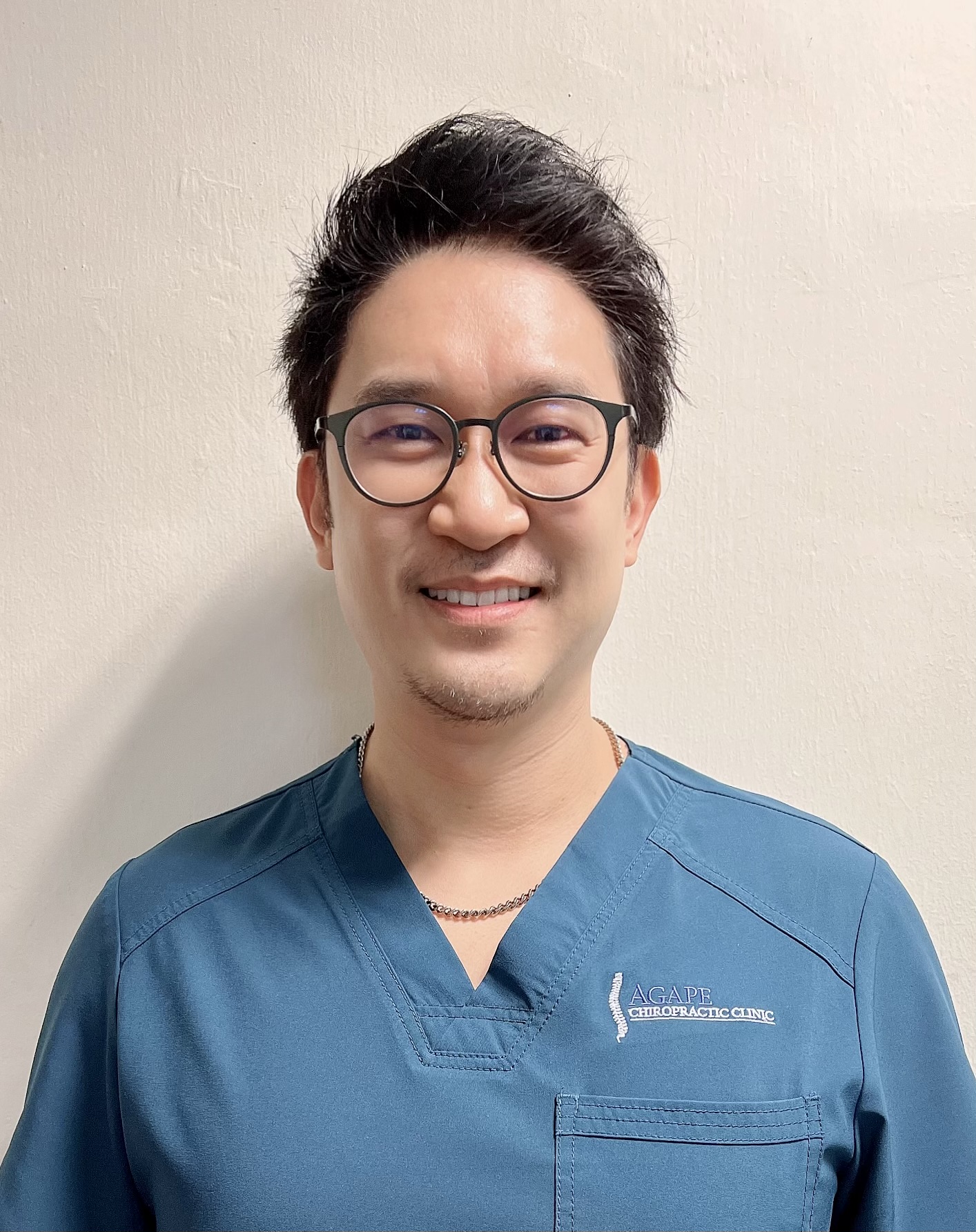
Dr. Luke Ho
Dr. Luke Ho obtained his Chiropractic degree from Palmer College of Chiropractic, Davenport, Iowa, USA in 2005. Prior to graduating, he worked in the campus clinic for 18 months as a clinical extern, treating students, faculty, and outpatients. In 2001 Dr. Ho obtained a BSc. in Sports Medicine from the University of Evansville, Indiana, USA. During his 3rd and 4th years there, he interned at the St. Mary’s Hospital Cardiac Rehabilitation Department, the St. Mary’s Sports and Fitness Center, and the University of Evansville Rehabilitation Center where he worked closely with the university tennis, volleyball, basketball and baseball teams.
Questions